Amsterdam Airport Terminal - Schiphol Terminal
Information compiled by David Enrich, aviation and airport guide expert since 1999.
Amsterdam Schiphol Airport (AMS) – Terminals Guide
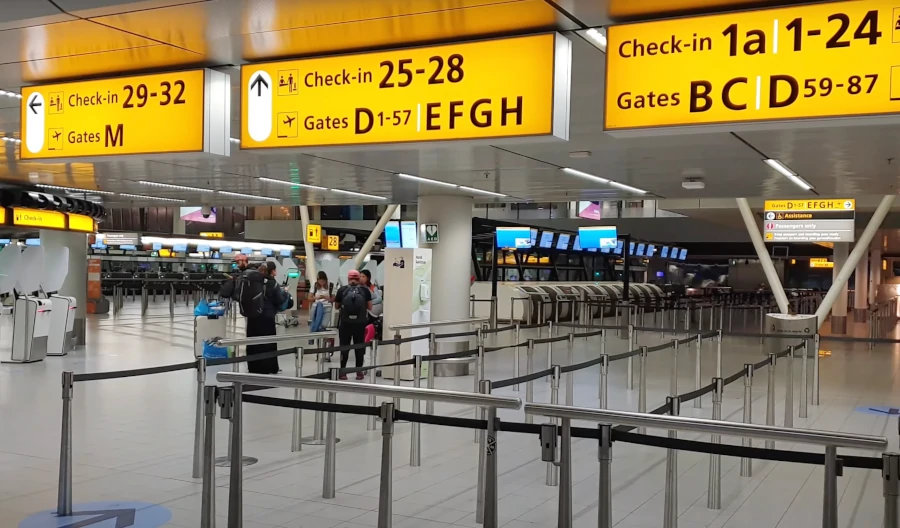
Amsterdam Schiphol Airport operates with a unique single-terminal concept, making it one of the most efficient airports in Europe. All departure halls, piers and services are located under one roof, simplifying connections and passenger flow.
The airport handles Schengen and non-Schengen flights through multiple interconnected concourses (B, C, D, E, F, G, H and M), allowing passengers to move freely after security.
Schiphol is easy to navigate conceptually, but distances can be long—always allow extra time to reach your gate.
Terminal Map
History & Origins
Schiphol Airport opened in 1916 as a military base and evolved into a major international hub. Its modern design focuses on efficiency and connectivity, with a single-terminal structure developed to simplify transfers and improve passenger experience.
Terminal Structure & Departure Halls
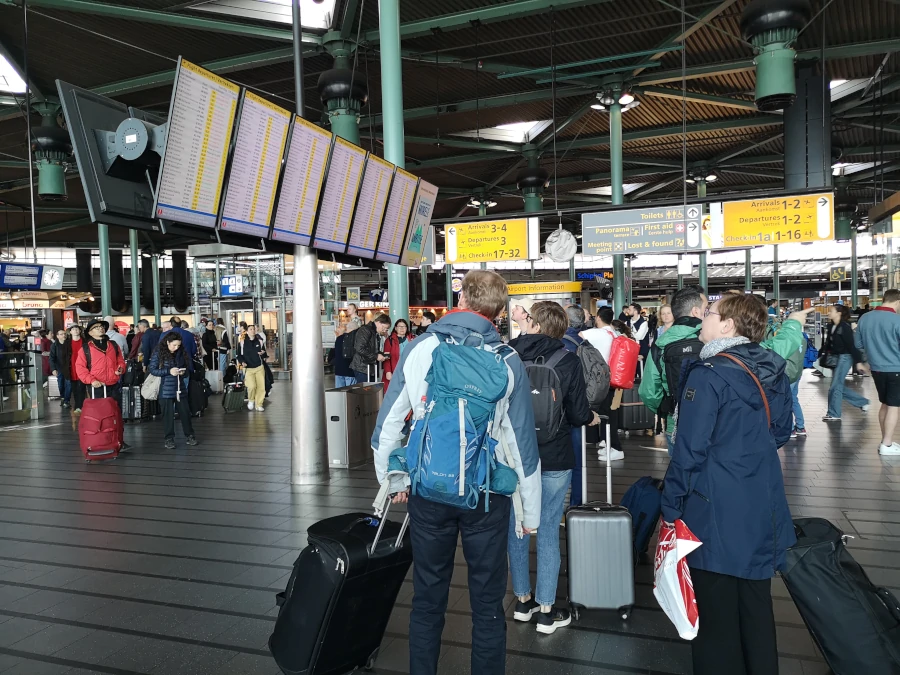
The airport is divided into three main departure halls, all interconnected:
- Departure Hall 1: Piers B and C (mainly Schengen)
- Departure Hall 2: Piers D and E (mixed flights)
- Departure Hall 3: Piers F, G and H/M (long-haul and low-cost)
Pier D has two levels: upper (Schengen) and lower (non-Schengen), which is important for transfers.
Piers & Gate Areas
- B & C: Short-haul Schengen flights
- D: Mixed operations (two levels)
- E: Intercontinental flights
- F & G: Long-haul international
- H & M: Low-cost airlines
Terminal Levels
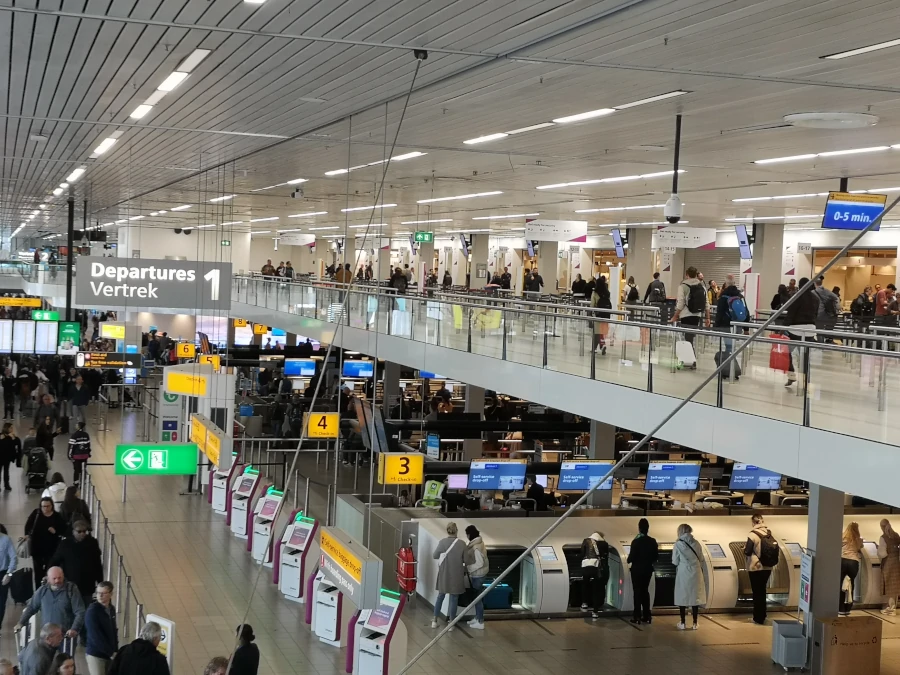
- Level 0: Arrivals, baggage claim, transport
- Level 1: Check-in and departures
- Level 2: Security, lounges, restaurants
- Level 3: Panorama terrace
The train station is located directly below the terminal, providing fast access to Amsterdam and beyond.
Walking Times & Distances
Popular Routes
Typical Airport Times